
Muslim defense pact unites the rich one, the bellicose one, and the poor one
A new Muslim defense pact will be signed this Friday in Jeddah, and Washington was not invited.
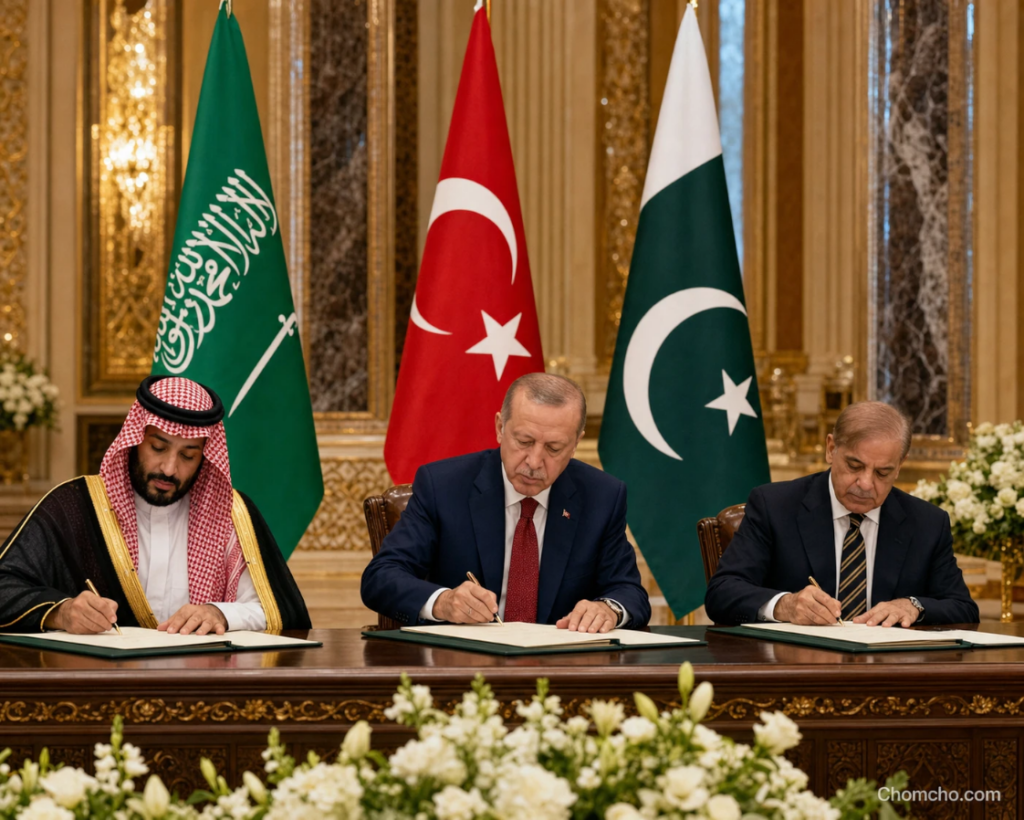
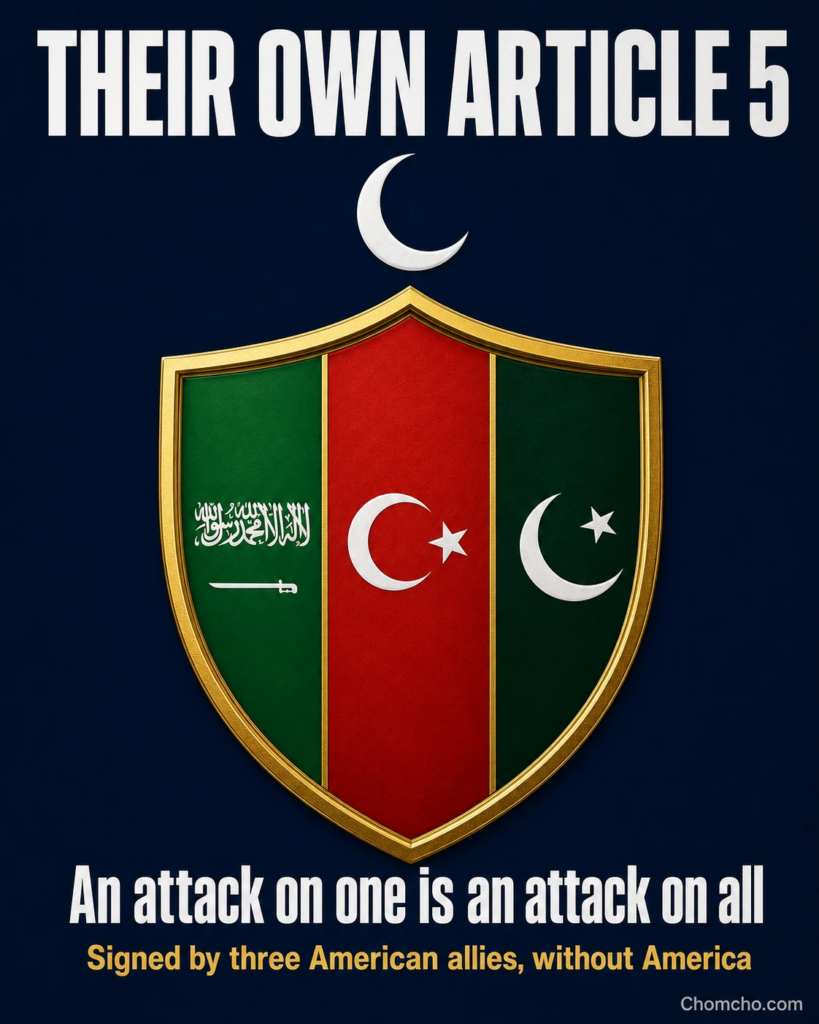
Saudi Crown Prince Mohammed bin Salman, Turkish President Recep Tayyip Erdogan, and Pakistani Prime Minister Shehbaz Sharif will meet in the Saudi coastal city to sign a trilateral defense agreement, according to Reuters and AFP sources.
Turkey is formally joining the pact that Saudi Arabia and Pakistan signed in September 2025, an agreement whose core clause declares that an attack on one country is an attack on both. That language is a copy of NATO’s famous Article 5.
The timing says everything.
The United States and Iran are at war. The Strait of Hormuz is closed. Houthi missiles wounded Saudi civilians near the Yemen border this same week.
One simple headline, three complicated countries
The Israeli press describes the pact as an effort to contain Iran. That is true, but only for one of the three signers.
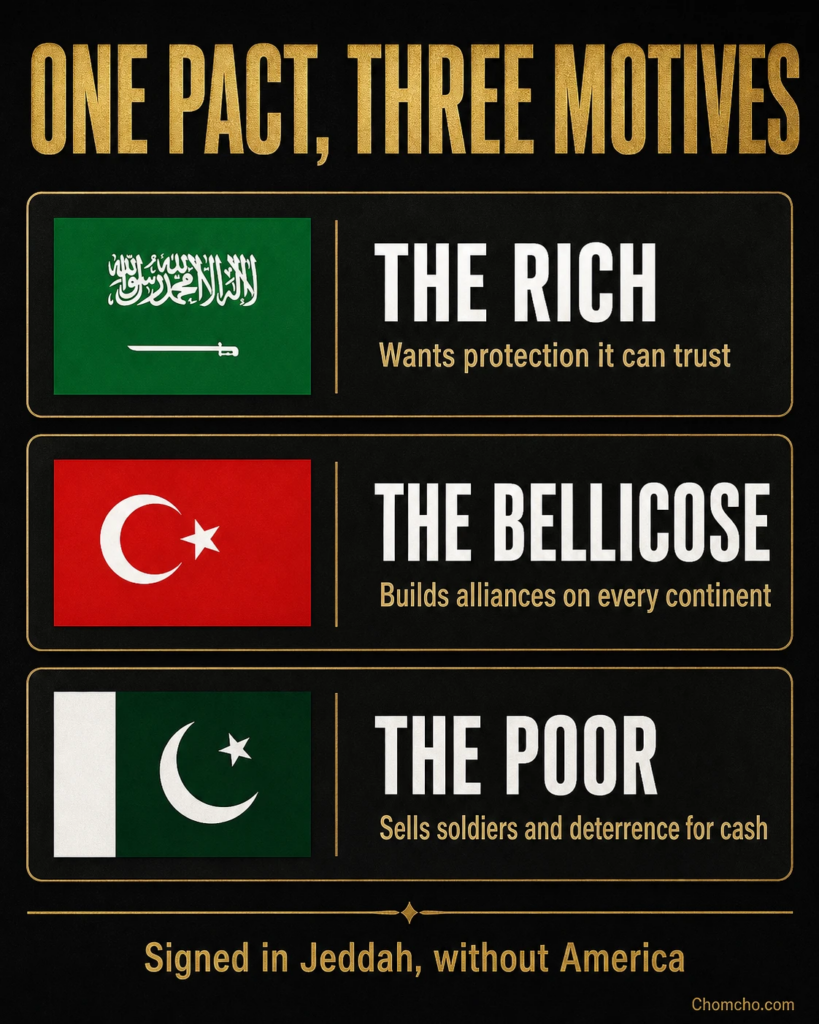
In reality, this is a story about foreign policy motives that do not match. A simple way to remember the three actors: the rich one, the bellicose one, and the poor one.
Saudi Arabia is the rich one. Turkey is the bellicose one. Pakistan is the poor one. Each country signs the same paper this Friday for a completely different reason.
The rich one: Saudi Arabia wants protection it can trust
Riyadh’s motive is the straightforward one. A senior Saudi official said this week that the kingdom expects attacks “from north and south.”
The Saudis have learned that hosting American bases does not guarantee American protection.
Iranian drones burned Saudi oil facilities in 2019, and Washington responded with words.
Israel struck targets in Doha, the capital of neighboring Qatar, in September 2025, and Washington offered only a mild complaint.
Less than two weeks after that strike in Doha, Riyadh signed the pact with Pakistan. The Saudis reportedly did not even inform Washington before signing.
A Reuters journalist asked whether the pact obliges Pakistan to extend its nuclear umbrella over Saudi Arabia. The senior Saudi official gave a chilling answer: the agreement “encompasses all military means.”
The bellicose one: Erdogan collects alliances like an empire collects provinces
Turkey’s motive is the complex one, and readers of this site already know the pattern.
Ankara keeps a military base and a defense pledge in Qatar. Ankara holds naval and port rights in Somalia until 2034. Turkish troops operate in Libya. Turkish drones arm a dozen African states.
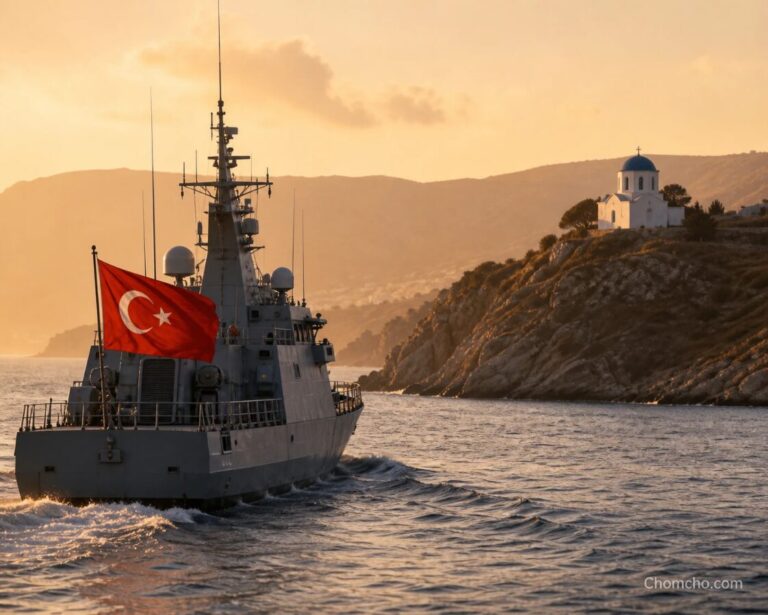
Last week, as we informed our readers, Turkey also announced it was raising military readiness over Cyprus, and blamed Israel for it.
Turkish analyst Goktug Caliskan described his country’s strategy with unusual honesty, calling Ankara “a unique geopolitical hybrid”: a NATO member equipped with weapons of NATO standard that speaks the language of the Global South.
That is the game.
Turkey keeps the protection and technology of NATO while it builds a parallel network of Muslim alliances.
Erdogan enjoys the benefits of both clubs and offers loyalty to neither.
The poor one: Pakistan sells the one thing it has
Pakistan’s motives come in order of urgency: money, India, and relevance.
During this fiscal year alone, Saudi Arabia has become its largest external financier, providing loans and deposits worth more than $6,000 million dollars.
The pact formalizes Pakistan’s oldest export: soldiers and deterrence in exchange for cash.
The second motive is India. After the military crisis between India and Pakistan in May 2025, the pact changes the calculations of any future war.
An Indian strike on Pakistan could now be interpreted as an attack on Saudi Arabia, a kingdom where two and a half million Indian citizens work and send money home.
Former Indian Foreign Secretary Kanwal Sibal called the pact a “grave misstep” by Saudi Arabia and warned it was “strategically most adventurous.”
The third motive is relevance. This agreement seats a nearly bankrupt state at the center of Middle East geopolitics, while India, one of the largest economies on earth, is left outside of the agreement.
Why Israel is nervous, and why Washington should be
Are these three countries reliable American allies?
Officially, yes. Turkey sits in NATO. The United States has officially designated Pakistan a major non-NATO ally. Saudi Arabia is a top buyer of American weapons.
Yet these three American partners just built their own Article 5, and America is not in it.
Georgetown professor Gregory Gause argues the pact is a message to Washington: if the United States cannot restrain Israel from striking its Middle East partners, the Saudis will turn to other security providers.
For Israel, the concern is more direct. Erdogan calls Zionism a genocidal ideology and shelters Hamas figures on Turkish soil.
This Friday, that same Erdogan gains a seat in a pact standing next to the only nuclear arsenal in the Muslim world.
Pakistani Deputy Prime Minister Ishaq Dar was asked about the idea of a broader joint Muslim security force. Dar answered: “Why not? What’s wrong with that?”
The lesson that the America First policy already taught
None of this happened by accident.
It happened because years of weak American foreign policy taught the region a lesson: American protection is not guaranteed, especially in one of the most turbulent regions of the world.
Allies who doubt American protection will buy protection somewhere else.
Some will buy it from Pakistan. Others will buy from Beijing, which already supplies most of Pakistan’s weapons and has replaced Washington as Saudi Arabia’s main trade partner.
President Trump has an opening to reverse this drift, and the tools exist: stronger written defense commitments for the Gulf, delivered from a position of strength, not apology.
Peace Through Strength is not a slogan.
It is the only policy that keeps allies from writing their own Article 5.
America can still be the umbrella of protection that the free world trusts, and this Friday in Jeddah is the reminder to act. ???????? ???????? ????
CMC, 1