
Colombia has a new president: De la Espriella took the oath while police defused a bus bomb near Cali
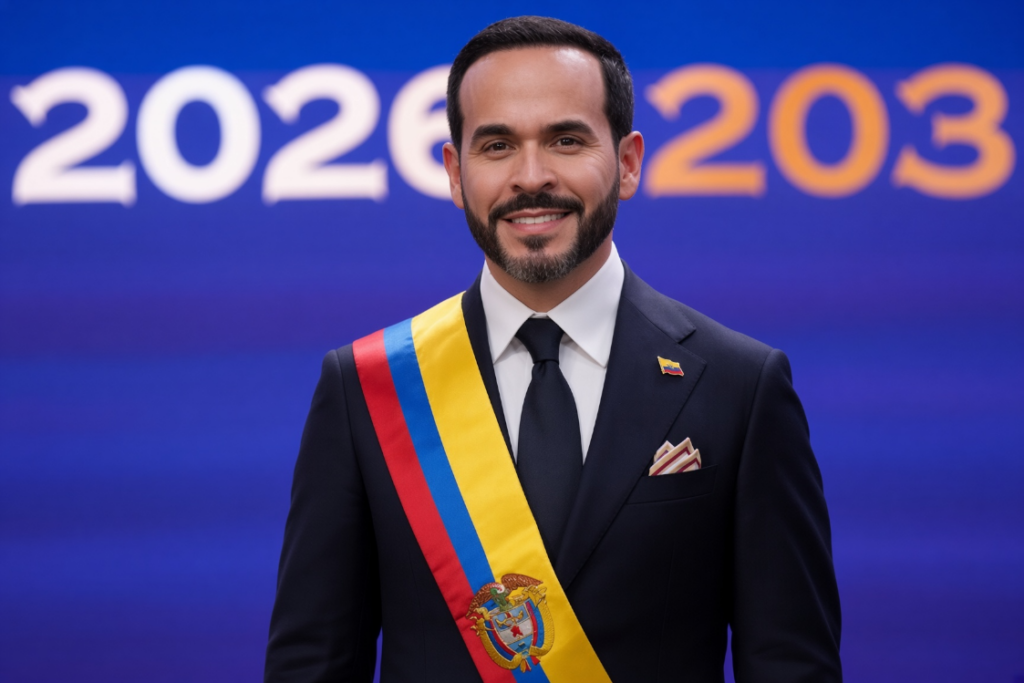
Abelardo de la Espriella was sworn in this Friday in the city of Cali, the first presidential inauguration held outside Bogota in the modern history of Colombia.
He received the presidential sash from Senate President Honorio Henriquez, and immediately after the ceremony he visited the Pichincha military canton to speak to the troops as his first official act.
That final detail matters.
De la Espriella originally wanted to take the oath itself at a military base in Cauca, as a tribute to the soldiers of Colombia.
Outgoing President Gustavo Petro blocked that plan and ordered the military not to cooperate. The new president answered by taking his oath in Cali and then going straight to the soldiers anyway.
Security forces proved they deserve that tribute this same week.
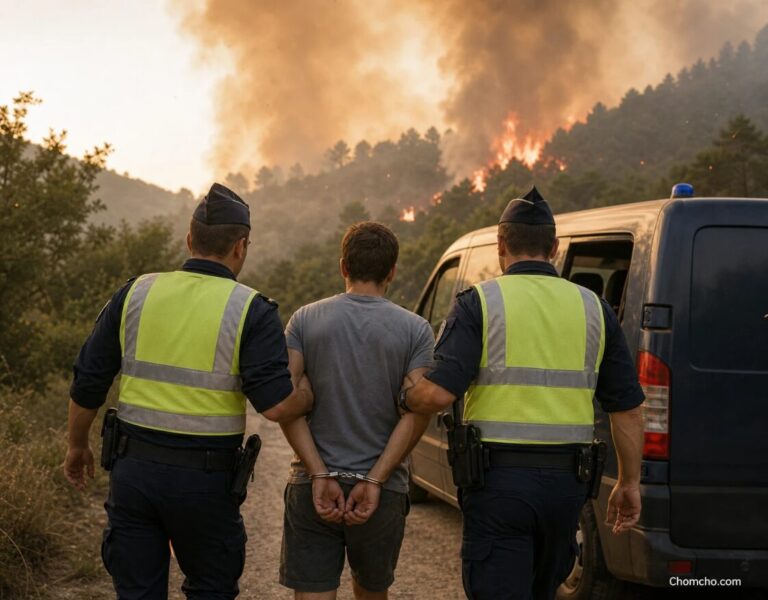
On Wednesday, police intercepted a bus loaded with 420 kilograms of explosives and hidden launch ramps, about 48 kilometers from Cali.
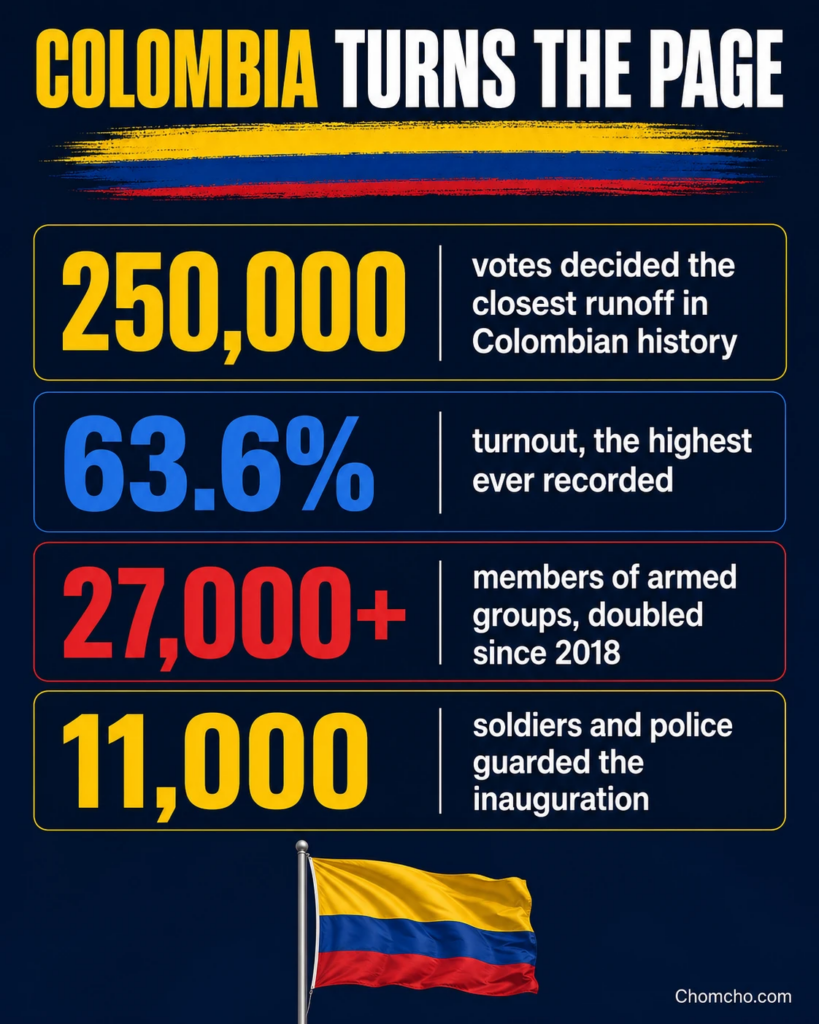
Investigators suspect a FARC dissident commander planned the attack. Around eleven thousand soldiers and police officers guarded the ceremony.
The guest list told its own story.
Former presidents Alvaro Uribe, Ivan Duque, and Cesar Gaviria attended, along with King Felipe VI of Spain and the presidents of Argentina, Ecuador, Chile, Panama, and Paraguay.
Former president Juan Manuel Santos, the architect of the 2016 peace deal with the FARC, was not invited.
The message seems clear: the man who gave legal benefits to the same groups that just tried to bomb Cali was not welcome at this ceremony.
Petro’s bitter exit
Petro did not attend the ceremony, and he left power with resentment instead of dignity.
The outgoing president spent weeks repeating that De la Espriella “was not elected by a majority of the people.”
The numbers say otherwise.
De la Espriella won the June runoff by just over 250,000 votes, with 49.66% against 48.70% for Senator Ivan Cepeda, the chosen heir of Petro.
Turnout reached 63.6%, and De la Espriella became the most voted presidential candidate in the history of Colombia.
Cepeda now leads the opposition from the Senate, promising to defend what he calls the social gains of the Petro years.
Petro himself will preside over his Historic Pact party, confirming that he plans to fight the new government from day one.
The top domestic priorities of the Tiger
De la Espriella, whom Colombians call the Tiger, announced his priorities one by one.
First, security. “The option of dialogue is completely exhausted,” the new president declared, ending the failed Total Peace policy of Petro.
His government will publish an official list of narco-terrorist organizations and order the police and military to fight them with full force.
Second, territorial control. In his own words: “If we don’t control our cities and our rural areas, this nation will lose its sovereignty.”
The statistics justify the urgency: membership in armed groups doubled from 13,000 in 2018 to more than 27,000 by the end of 2025.
Third, the economy. He promises spending cuts of up to 40%, a tax reform, and an end to new public debt. The fiscal deficit doubled under Petro.
Fourth, energy. De la Espriella will revive the oil and gas projects that President Petro froze, in a country that suffered gas shortages under the previous government.
An outsider president faces the test of Congress
Here is the honest challenge.
De la Espriella has never held public office, and his own political vehicle, the Defenders of the Homeland movement, barely exists in Congress.
The National Salvation Movement that backed him holds only 4 seats in the Senate and 1 in the House.
His natural allies are the established parties of the right.
The Democratic Center, the party of former president Uribe, holds around 17 Senate seats and 30 in the House.
The Conservative Party, Cambio Radical, the Partido de la U, and the Liberal Party complete the coalition. Together they form a working majority in both chambers.
The opposition is now concentrated in a single force: the Historic Pact of Petro and Cepeda, which is actually the largest single party, with around 26 Senate seats and 42 in the House.
The full Senate has 103 seats, and the House has 183.
The left no longer runs as scattered small parties. It ran united, and it lost anyway.
One warning sign already appeared.
In July, the Senate rejected the candidate of De la Espriella for Senate president, and members of the Democratic Center joined the left in that vote.
The winner was Henriquez, from the party of Uribe.
The lesson is simple: the Tiger has a majority on paper, but he will need to keep Uribe and the traditional parties satisfied to use it.
Foreign policy: the region first
The foreign policy shift is immediate.
With Ecuador, De la Espriella promises full normalization after President Petro cut electricity sales to Quito and nearly provoked a border crisis.
With Peru, Colombia gains a natural partner in the new government of President Keiko Fujimori, who took office in July.
With Cuba and Nicaragua, the answer is total rupture. In his own words: “In my government, there will be no ties whatsoever with tyrannies.”
On Venezuela, Colombia will work through Washington, which now deals with the interim government in Caracas.
Foreign policy: the world, and Israel
De la Espriella will close 14 embassies around the world to redirect money toward security at home.
With Europe and China, his approach is pragmatic and commercial.
The most important change involves Israel. Petro severed relations in 2024.
De la Espriella will restore those relations completely: the embassy of Colombia will reopen in Jerusalem, visa requirements for Israelis will end, and Colombia will withdraw from the case against Israel at the International Court of Justice.
Israel has already named its new ambassador to Bogota.
America gains an ally where it needs one most
Colombia is the top cocaine producer on earth, and its trafficking routes feed the cartels of Mexico through the Caribbean.
For the United States, no partner in the region matters more.
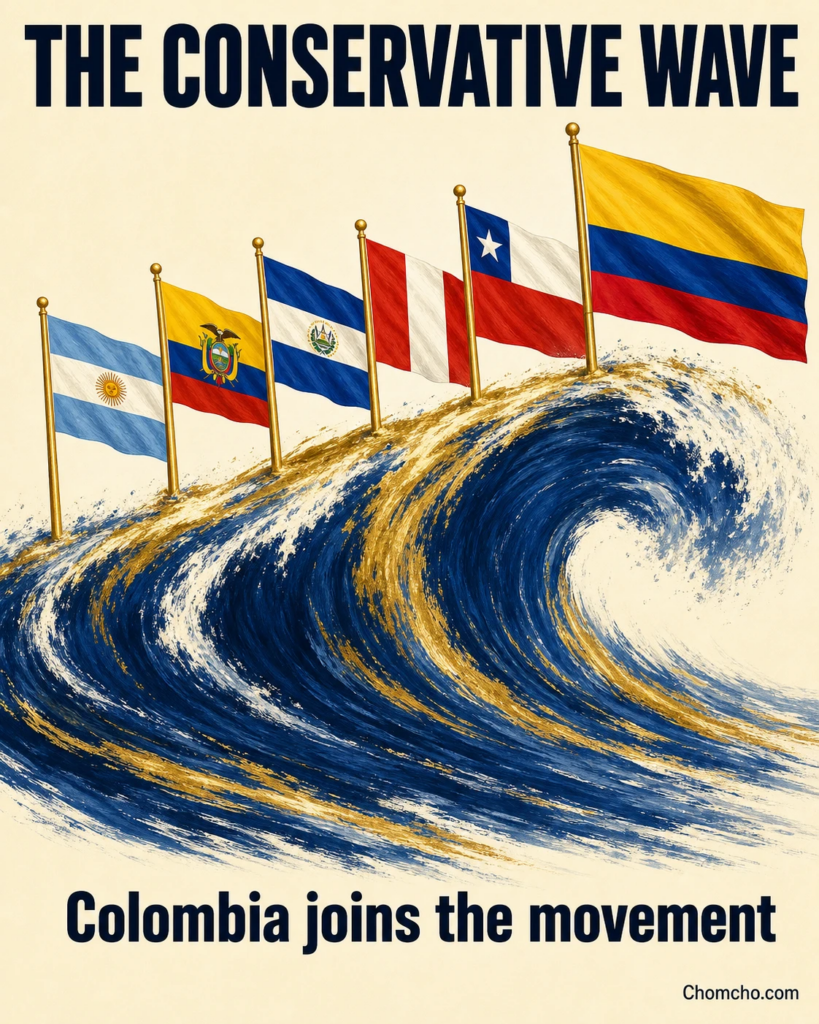
The new president, himself a naturalized American citizen, will bring Colombia into the Shield of the Americas, the anti-cartel coalition that already includes Peru, Argentina, Ecuador, and El Salvador.
His government agreed with the Pentagon on a new security plan named Plan Patriota 2.0, echoing the strategy of the Uribe years.
This Friday, the State Department announced 1,000 million dollars in security assistance for Colombia, pending approval from Congress.
After four years of a hostile government in Bogota, the United States recovers its oldest ally in South America.
The conservative wave in Latin America now reaches from Buenos Aires to Bogota, and Colombia has a new president determined to lead it.
God bless Colombia. ???????? ???????? ????
CMC, 1