
Tokyo takes its defense diplomacy abroad
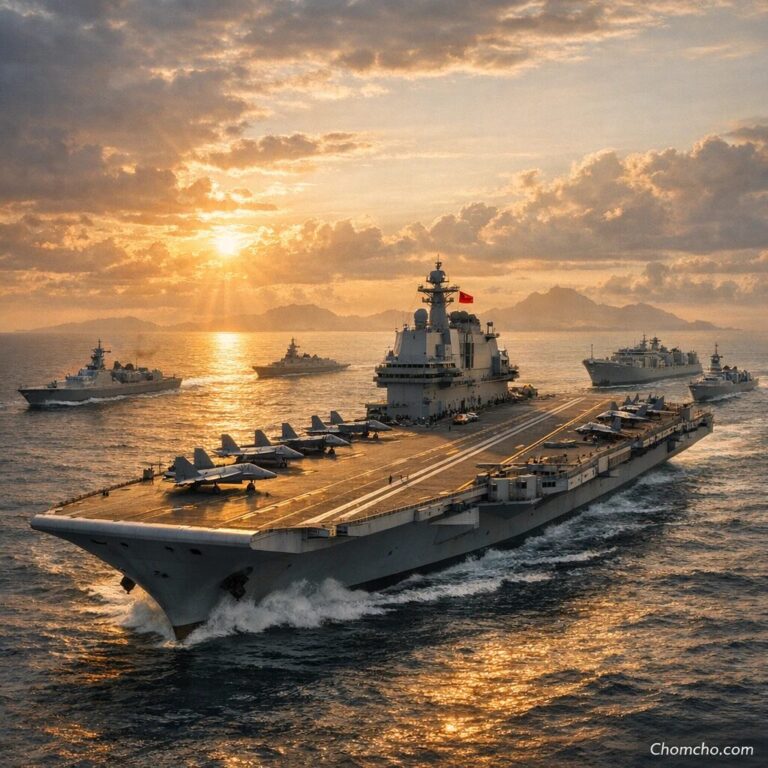
The Indo-Pacific alliance against China is no longer a diagram in a think tank paper. It now has warships, contracts and flight schedules.
Jiji Press of Japan reported on August 6 that Japanese Defense Minister Shinjiro Koizumi plans visits to Australia and India this month, focused on defense equipment cooperation.
With Australia, the agenda includes a joint effort to convince New Zealand to buy the same Japanese frigate that Australia already ordered.
The three defense ministers held their first trilateral meeting in history on May 30 in Singapore.
One tour connects three democracies with one shared goal. This is what a working foreign policy looks like in the Pacific.
The Mogami frigate deal changed Japan forever
On April 18, 2026, aboard the Japanese warship JS Kumano in Melbourne, Japan and Australia signed the Mogami Memorandum.
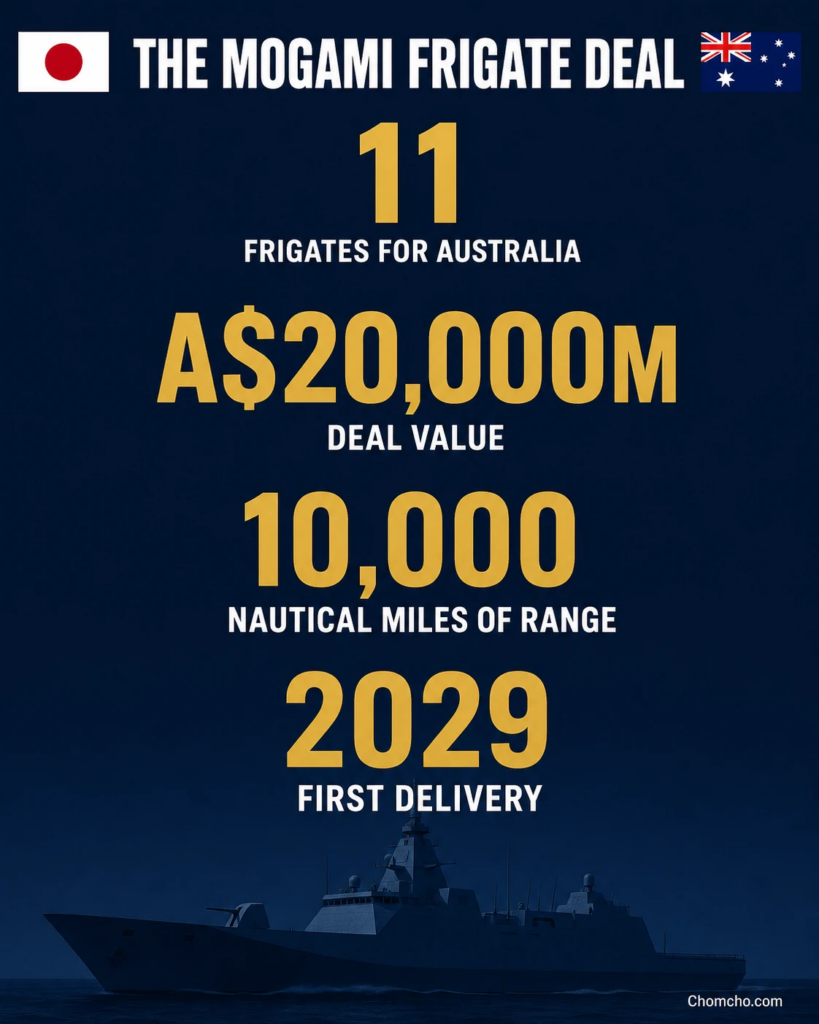
The contract, with a value of up to A$20,000 million (approximately US$14,400 million), commits Japan to supply 11 upgraded Mogami-class frigates to the Royal Australian Navy.
It is the largest defense export in the history of postwar Japan.
The first three ships will be built in Japan, the rest in Henderson, Western Australia, with the first delivery expected in 2029. Each frigate carries 32 vertical launch cells and has a sailing range of 10,000 nautical miles.
The symbolism is enormous.
This year, the two countries mark the 50th anniversary of their friendship treaty, and Japan chose that same anniversary year to abandon its postwar military restraints.
Australia’s own 2026 defense strategy calls Japan “an indispensable partner.” Prime Minister Sanae Takaichi has turned her country into an arms exporter, and the free world is the customer.
Northern Australia becomes the rear base
The summer of 2026 turned the geopolitics of the region into something visible in the sky.
In July, Exercise Southern Cross made history: the first trilateral exercise of American, Japanese and Australian fifth-generation fighters, with 1,000 airmen and 40 aircraft over northern Australia.
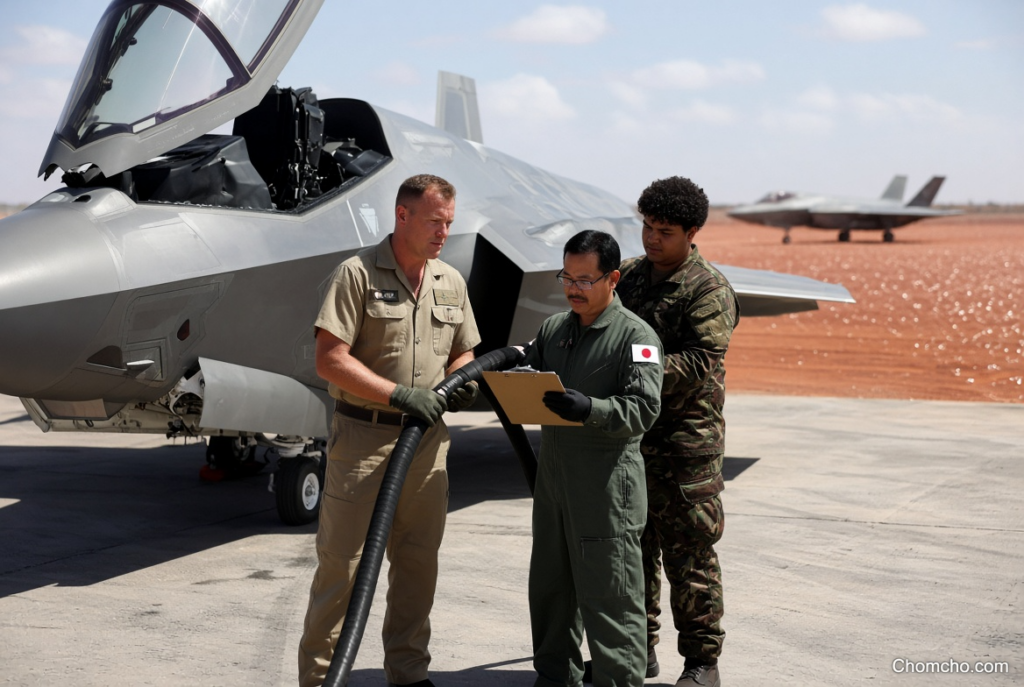
Days earlier, the three air forces signed their first logistics agreement to share fuel and equipment.
Then came Pitch Black, the largest air exercise in the Southern Hemisphere: 21 nations, about 100 aircraft and 2,500 personnel.
Japan sent six F-35A stealth fighters and two radar planes, the first time Japanese F-35s ever flew this exercise. India sent Rafale fighters. Australian airmen refueled Japanese jets far from their bases.
Japanese Colonel Murao Taro explained why this matters, in one sentence: “an air base is not a sanctuary.” Chinese missiles can reach every runway in Japan. Northern Australia, far behind the front line, gives the alliance a rear base to survive and fight back.
Beijing supplied the proof.
The day Exercise Southern Cross opened, a Chinese submarine conducted a ballistic missile test in the South Pacific, and the missile landed north of the Solomon Islands.
The submarines and the honest numbers
The AUKUS pact survived its hardest year.
The Pentagon review led by Elbridge Colby, completed in December 2025, backed the agreement.
In May 2026, the three partners revised the plan: Australia will now receive three in-service Virginia-class submarines from the American fleet, and U.S. submarines will operate from HMAS Stirling in Western Australia starting in 2027.
Honesty requires the hard numbers.
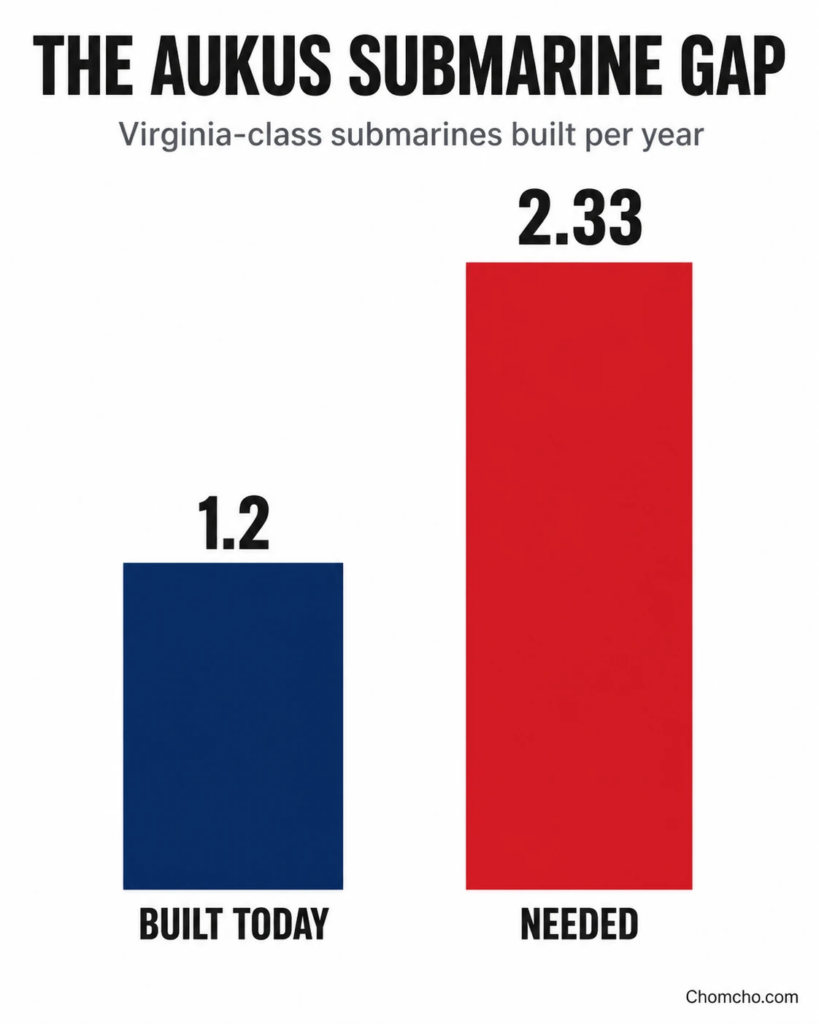
American shipyards build about 1.2 Virginia-class submarines per year. The U.S. Navy calculates that production must reach 2.33 per year to replace its own fleet and still sell submarines to Australia.
That gap is the real threat to AUKUS, bigger than any Chinese protest.
The May revision exists precisely because used submarines relieve the pressure on American shipyards.
The allies keep paying their share.
Australia committed A$3,900 million in February for the Osborne shipyard in South Australia, part of a total investment of A$368,000 million over three decades.
British Defense Secretary John Healey admitted the past failures with unusual honesty: “For too long in AUKUS, we talked too much and delivered too little.”
The analysts ask for one more step
The think tanks of the three allies mostly agree: the strategy is right, and the allies are doing the work.
Analysts at CSIS in Washington report that Japan’s defense budget has grown 50 percent since 2022, and that Japan will become the largest F-35 operator in the world after America, with 146 aircraft planned.
Their conclusion: Beijing now faces “a Japan that can shoot back.”
Australia’s ASPI institute praises the strategy of denial and long-range strike, but warns that partnerships with Japan and India are as vital as defense spending itself.
The missing piece, according to the Carnegie Endowment, is integration: the alliance still lacks a combined command structure, a joint deterrence force that unites what today are separate bilateral efforts.
The hardware is arriving; the unified command is not there yet.
On that point, the allies are doing what the analysts recommend, just not yet all together.
America First gets results in the Pacific
For years, the media promised that demanding more from allies would destroy the alliances.
The Indo-Pacific alliance proves the opposite.
Japan exports warships. Australia builds shipyards and hosts American submarines. India flies its fighters over Darwin. New Zealand asks to join the frigate family.
Every allied ship and jet is a burden that America does not carry alone, and every base in northern Australia is a position Chinese missiles cannot easily erase.
Peace through strength multiplies when friends carry their share of the weight.
Strong nations defending their own homes make the best allies.
The Founders understood that truth about America, and the Pacific democracies are learning it now.
Peace through strength. ????????????????????????
CMC, 1